Start with the feeling, then find the dress
Before saving another photograph, describe how you want to feel in three words. Relaxed, architectural, romantic, playful, polished: these words are more useful than a long list of trends. Then look at clothes you already enjoy wearing. A favorite square neckline, a clean shoulder line, or a skirt with movement can offer a familiar starting point. Bridal clothing can feel special without making you feel disguised.
Create a small inspiration folder and annotate each image. Write “soft skirt” or “open back,” rather than simply “love this.” Notice patterns across the pictures. Limit the folder to a manageable selection so a consultant can understand your priorities. Separate styling you admire in photographs from construction you would enjoy wearing for several hours.
Build a budget for the entire look
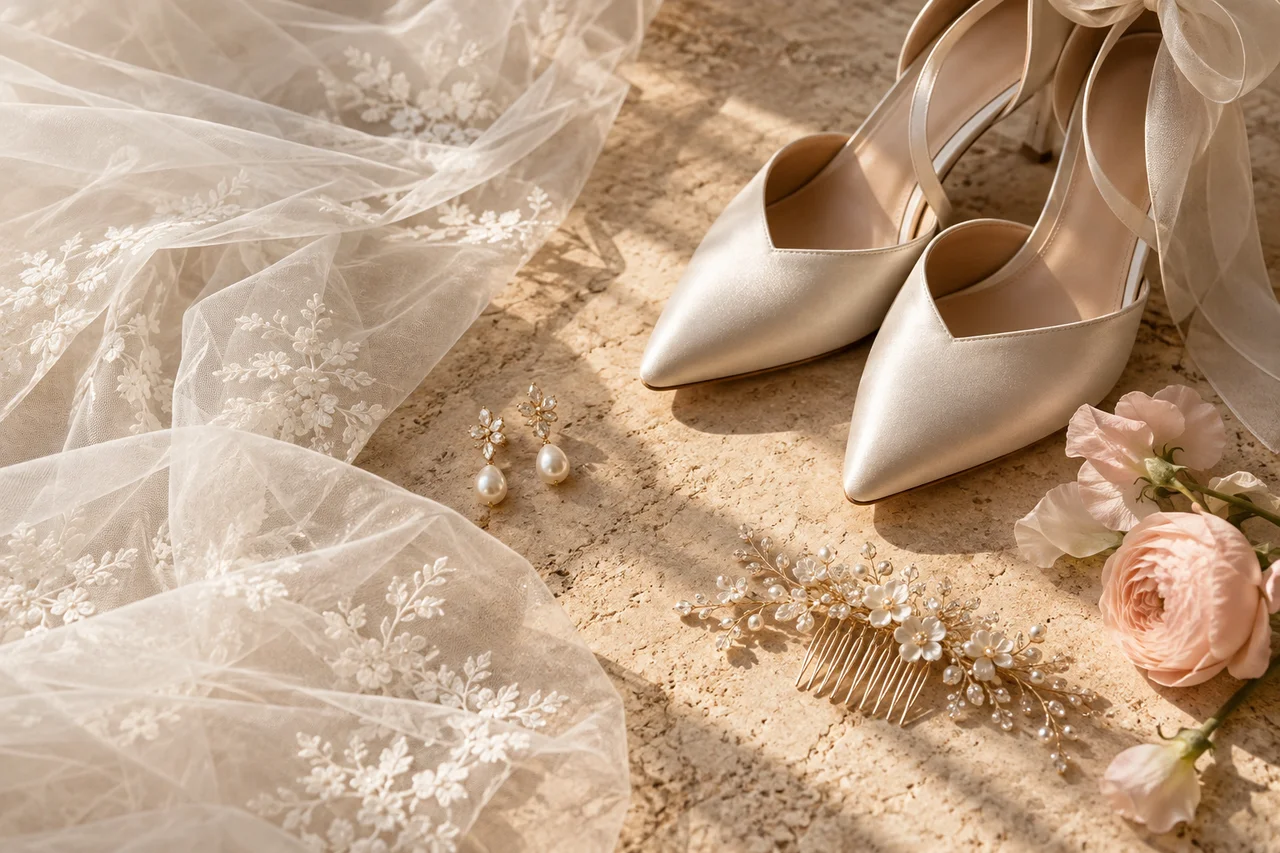
Set a comfortable ceiling before booking appointments and explain whether it includes alterations. The dress tag is only one part of the decision. Possible expenses include tailoring, undergarments, shoes, a veil, accessories, garment care, delivery, and any applicable charges. Ask each retailer what is included and request written terms before paying. There is no universal alteration allowance that fits every gown.
Use three columns in your notes: confirmed costs, estimates, and optional extras. Keep optional purchases outside the amount you need for essential fit work. A simpler gown with appropriate alterations can be a better decision than a more elaborate one that leaves no room for finishing. Do not agree to a purchase because someone assumes another person will cover the difference.
Try a small range of silhouettes
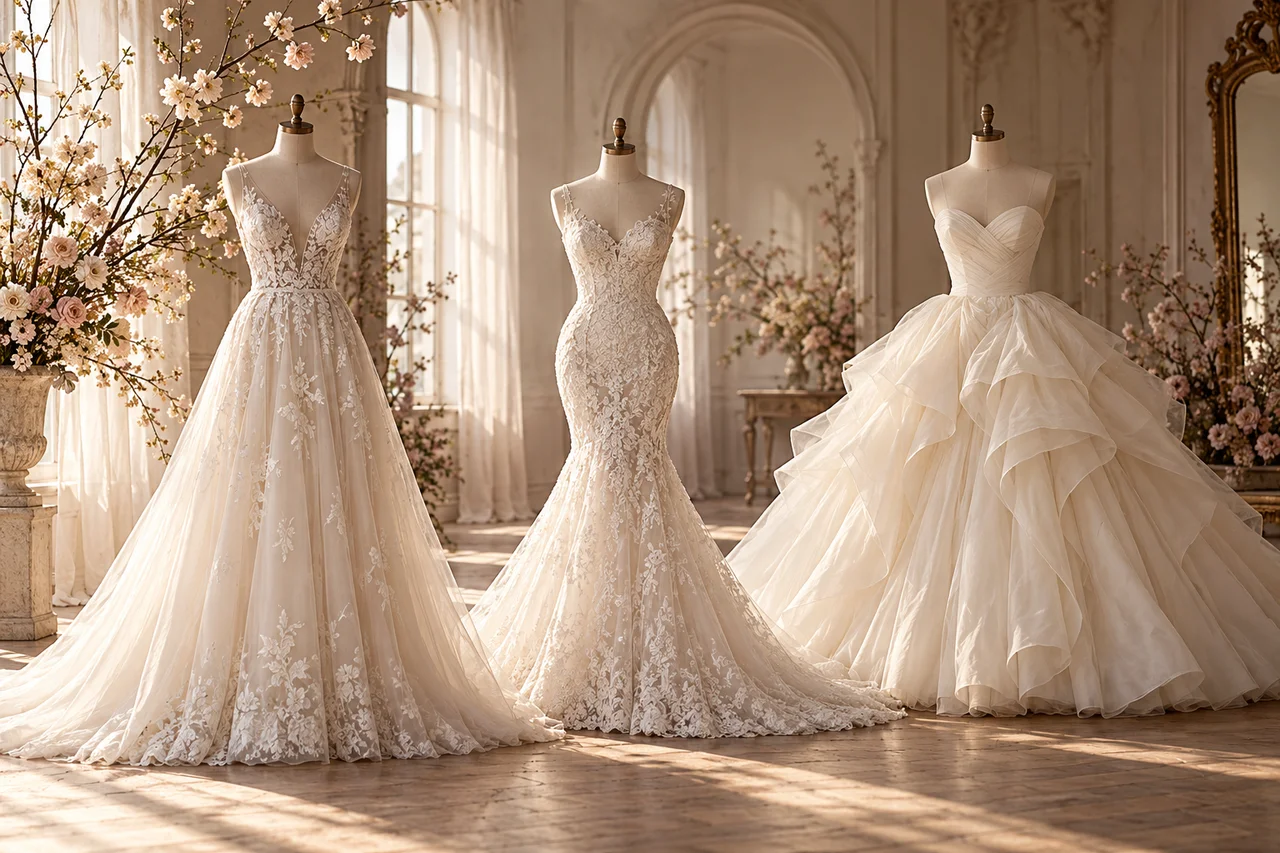
An A-line dress gradually widens below the waist; a ball gown creates more dramatic skirt volume. A sheath follows a straighter line, while mermaid and trumpet shapes fit closely before widening lower down. These terms describe clothing, not rules about which bodies deserve to wear it. Try shapes that interest you and judge the individual garment rather than the label.
Ask to compare a structured bodice with a softer construction. Notice where the waist seam sits and how the dress feels through the ribs, hips, and shoulders. Samples may need clips or temporary support; those adjustments cannot fully demonstrate the final fit. Ask what the correct size and intended tailoring would change, and what would remain part of the design.
Read fabric with your hands and your eyes
Fabric names alone do not predict comfort. A light-looking tulle skirt may have several underlying layers, while a relatively plain silk dress may have substantial internal structure. Ask to feel the lining and inspect the inside of the bodice. Notice whether lace edges rub your arms and whether embellishment catches against the skirt or veil.
View a shortlist in different available lighting. Ivory, champagne, and other pale shades can shift beside your skin and against the venue palette. Photographing a sample, with permission, can help you remember details, but phone exposure can change apparent color. Choose the effect you enjoy in person and confirm the exact ordered shade in writing.
Give every favorite a movement test
Sit in a chair, take ordinary steps, lift your arms, and turn around. If stairs are available and staff agree, test them carefully. Think about greeting guests, holding a bouquet, using a restroom, and getting into transport. A gown that looks wonderful while standing still may need practical adjustments for the rest of the celebration.
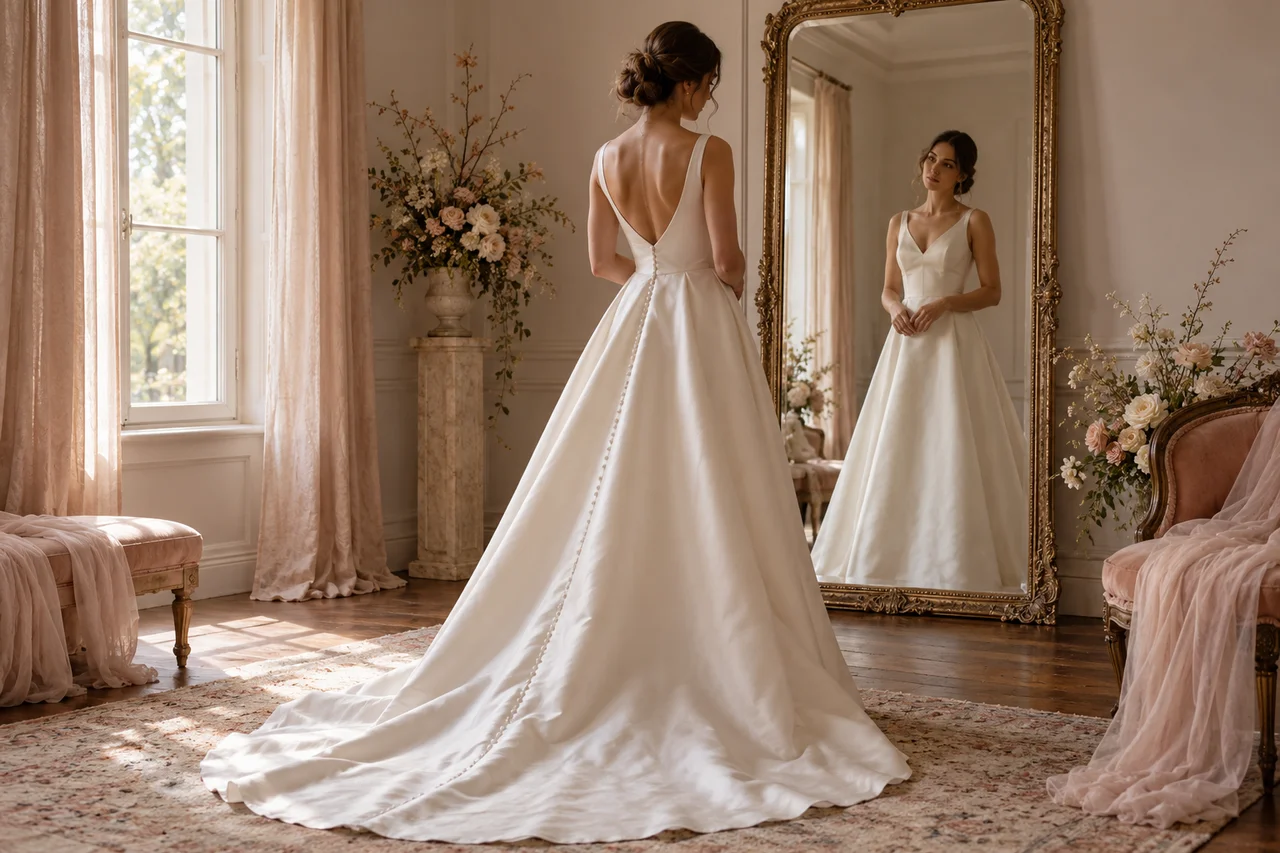
Discuss the train and bustle with whoever will alter the dress. Ask how it will be supported and who will help fasten it later. If you use a mobility aid or need particular support, describe that early so appointments and tailoring discussions address your actual needs. Comfort is part of the design brief, not an optional reward after appearance.
Choose your shopping company carefully
Invite people who can describe what they see without overriding your preferences. A small group often makes conversation easier, but the right number depends on you and the appointment rules. Tell guests your budget and priorities before arriving. Ask them to wait until you have described your own reaction before giving theirs.
If opinions conflict, return to your three style words and practical checklist. You do not need a dramatic emotional reaction to make a sound choice. Calm certainty can be enough. If you are unsure, take a pause and review notes later where retailer timing allows. Ask about holds rather than assuming a sample or quoted price will remain available.
Know what you are buying
Before committing, confirm the style, color, size, proposed modifications, payment schedule, estimated arrival, and alteration arrangements. Ask who handles a delivery problem and which changes are possible after ordering. Read cancellation and return terms directly; bridal purchases can have conditions that differ from everyday clothing. Keep receipts and written conversations together.
For an off-the-rack gown, inspect seams, closures, lace, and any wear before accepting it. For a custom design, ask how approval stages work. Do not rely on a verbal promise about a neckline or sleeve change that is missing from the order. The practical details protect the style decision you have worked to make.
A final decision you can explain
Compare your final choices using the same questions: Does it feel like me? Can I move comfortably? Does the complete cost fit? Can the supplier and alterations schedule meet the date? Which concern would still bother me after the excitement of the appointment has passed? Answering these is more useful than asking which dress looks most expensive.
Once the order is confirmed, reduce comparison browsing if it makes you anxious. Turn your attention toward fittings and the small details that complete the look. Your dress does not need to satisfy every trend, photograph, or guest. It needs to be a well-understood choice for your body, your celebration, and your own sense of style.