Design around the real route
Start with the journey from dressing room to ceremony, photographs, and reception. A celebration beside the water may include a paved terrace rather than a long walk across sand. Another may require a boardwalk and uneven ground. Ask the venue or organizer about the surfaces you will cross, how far you will walk, and where you can change shoes.
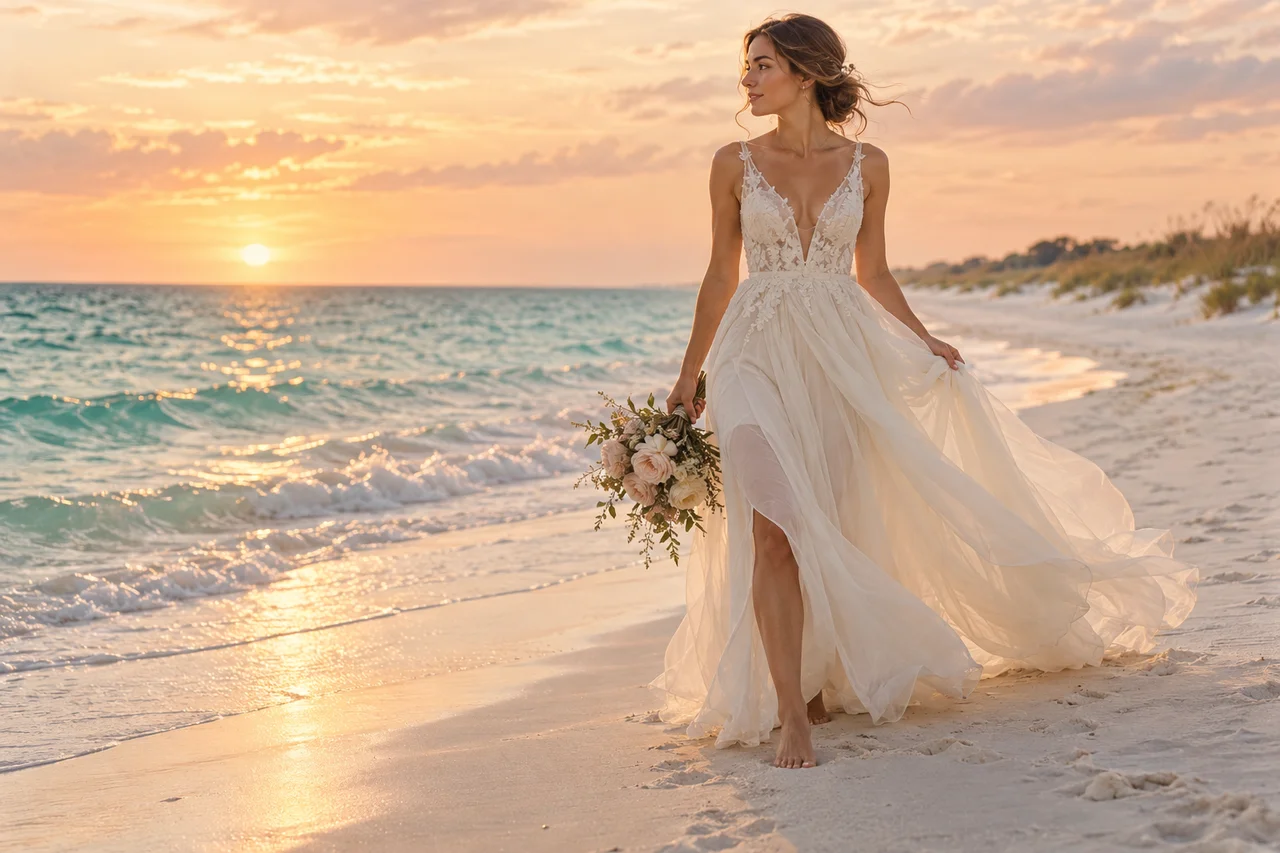
That information shapes the gown decision. A dramatic train might work beautifully with assistance and a short route. A very narrow skirt might be awkward over soft sand even if its fabric is light. Avoid deciding from a single beach photograph. Ask how the dress will work during the parts of the day that do not appear in that picture.
Light appearance is not the same as light construction
Chiffon, organza, and tulle can create an airy effect, but lining and the number of layers change how a gown feels. Lace can sit over either a light base or a much more substantial one. Ask to lift the skirt, inspect the layers, and feel the bodice lining. Compare whole garments rather than expecting one named textile to solve every comfort concern.
A clean satin gown can also suit a coast-inspired celebration if its construction and your preferences align. There is no requirement to wear bohemian lace. Use the setting as useful information rather than a costume brief. If you love structure, ask a consultant about less bulky ways to achieve the outline you want.
Support should feel secure without constant adjustment
Wind and movement can make you more aware of the bodice. Try lifting your arms, turning, and taking a comfortable stride. Notice whether you instinctively hold the neckline in place. Ask a qualified alterations professional what adjustments are reasonable and whether proposed straps are decorative or intended to provide support.
Consider texture where your arms touch the dress. Beading and lace can feel different after repeated movement. A skin-baring design is not automatically cooler or more comfortable than a covered one; fit, lining, and your own needs all matter. Test the actual construction and make decisions from what you experience, not from a general beach-style rule.
Hem and train decisions deserve a conversation
Tell your alterations professional which shoes you will wear and how you expect to walk. Sand changes underfoot, and the apparent hem height may shift with your stance. Ask about a manageable length and the effect of shortening decorative edging. Some changes require more detailed work than simply cutting away a strip of fabric.
If you keep a train, plan who will help carry or arrange it. Learn how the bustle works and practice before the reception. Ask what to do if a fastening fails. The person assisting should know the dress rather than trying to solve it under time pressure. Keep hands clean and avoid placing delicate fabric directly against rough surfaces where possible.
Footwear should match the ground
A broad heel, flat shoe, or other stable choice may be more convenient on some routes, but comfort is individual. Ask about actual surfaces and any restrictions before buying. Bare feet are not a universal answer: surfaces can feel rough, hot, or uncomfortable. If you change footwear between locations, consider both carrying and hem length.
Try walking with the gown and shoes together. A small difference in height can change how the skirt hangs. Tell your tailor about both pairs rather than hoping the hem will behave the same way. Pack the shoes so straps and embellishment cannot snag the dress. Keep a clean, accessible place for a change after photographs.
Veils and hair: allow for movement
A long veil can create beautiful motion, but it also needs attention outdoors. Ask your hairstylist how the comb will be anchored and how to remove it safely. Compare the veil with the train so the two lengths feel deliberate. Try holding a bouquet and turning while wearing both, with assistance where needed.
Choose a hairstyle you enjoy and discuss how it might change in outdoor conditions. Avoid expecting every strand to remain fixed. Keep practical touch-up items with a helper and plan a sheltered place for adjustments. If a veil feels distracting during a trial, you can reserve it for selected photographs or choose another accessory entirely.
A weather plan protects the experience
Florida coastal plans should include a comfortable indoor or sheltered alternative, with decisions made through the venue and relevant professionals. Check current forecasts close to the date rather than using a seasonal impression as a promise. Discuss who will decide on changes, how guests will be told, and how your route will work in the alternate setting.
Keep your dress compatible with both plans. Ask about garment storage, transport, and a clean dressing space if locations change. Do not make safety decisions from style advice. The responsible venue and local authorities are the appropriate sources for event conditions. A flexible plan gives you room to enjoy the clothing and celebration without depending on one exact forecast.
Local inspiration and your final checklist
For an introduction to the area's range of settings, the official Visit Sarasota County wedding guide describes coastal, garden, and other celebration options. Use it to begin venue research, then verify the rules and arrangements directly with the relevant property or authority. Inspiration is a useful first step; it is not a booking confirmation or permission to use a public location.
Before the final fitting, confirm your route, shoes, hem, train assistance, veil arrangement, and alternate venue plan. Make space for your personal style within those practical choices. A successful coastal gown does not have to look casual. It should let you move confidently and feel like yourself with the shoreline as a backdrop.
The official tourism organization introduces the area’s range of wedding settings. Read Visit Sarasota County’s wedding planning overview, then check arrangements directly with the relevant operator. Source checked October 22, 2026.